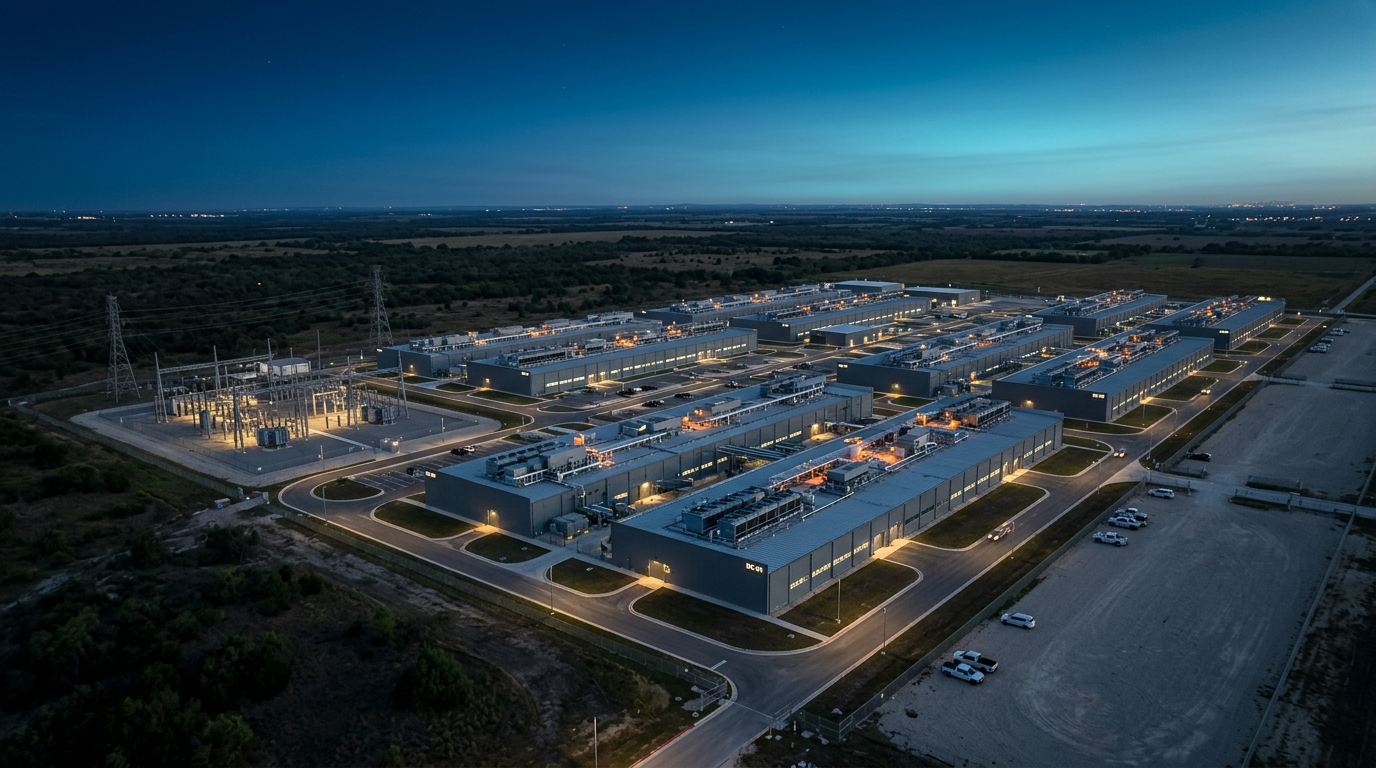
From Powered Land to Customer-Ready Capacity
The steps between a powered parcel and capacity a customer can contract for.
GridColo Infrastructure Team · · 3 min read
Power is necessary but not sufficient. Turning a powered parcel into capacity a customer can contract for requires qualification, packaging, and an operating model.
Qualify
Confirm site control, power status, fiber, zoning, water, and permitting pathway.
- Site control: deed, option, or lease with clear authority to develop
- Power: available MW today, interconnection status, and the schedule for more
- Fiber: carriers nearby and the cost and time to build diverse laterals
- Zoning: data center use permitted, or a realistic entitlement path
- Water: availability, or a cooling design that does not depend on it
- Permitting: environmental, building, and generator permits
Assign each evidence gap to a responsible party
- Owner or authorized representative: establish site control, submission authority, known constraints, and permitted disclosure.
- Utility or relevant supply counterparty: substantiate the actual supply arrangement, approvals, delivery boundaries, and dependencies.
- Qualified design and development team: identify feasibility, engineering, permitting, and construction requirements for the proposed phase.
- Carrier and connectivity parties: confirm reachable endpoints, construction dependencies, and the distinction between nearby routes and delivered service.
- Proposed operator and service counterparties: define retained duties, service scope, acceptance evidence, and ongoing support.
Start with a non-confidential summary that separates confirmed evidence, estimates, and unknowns. Keep detailed engineering, ownership, and commercial records in an appropriately controlled review process. The first useful output is a gap register with responsible parties and next decisions; it is not an automatic reservation, approved design, or promise of capital.
| Evidence gap | Accountable workstream | Next decision |
|---|---|---|
| Site-control evidence not yet reviewed | Owner or authorized representative | Confirm authority and the permitted disclosure scope. |
| Supply delivery conditions unresolved | Relevant supply counterparty and development team | Document boundaries, approvals, and dependencies before describing usable supply. |
| Technical feasibility incomplete | Qualified design and development team | Identify investigation and engineering required for the proposed phase. |
| Funding and customer demand unconfirmed | Applicable commercial parties | Evaluate financing and customer commitments separately; neither follows automatically from qualification. |
| Service activation scope not agreed | Proposed operator and service counterparties | Define tests, acceptance records, remaining exceptions, and operating responsibilities. |
Package
Create a capability profile, service catalog, and technical data room that customers can compare against other options.
Customers evaluate several sites at once. A package that uses the same structure, status labels, and specifications as other sites lets them compare quickly instead of starting a custom diligence process.
Contract and launch
Use a standard MSA, service order, and site exhibit, then onboard customers through a defined acceptance process.
Keep facility readiness, service acceptance, and commercial availability separate. Define the applicable tests, evidence, witnesses, and treatment of exceptions for the proposed handoff. Billing follows the order: advance or milestone charges may precede acceptance, while recurring charges use their specified trigger.